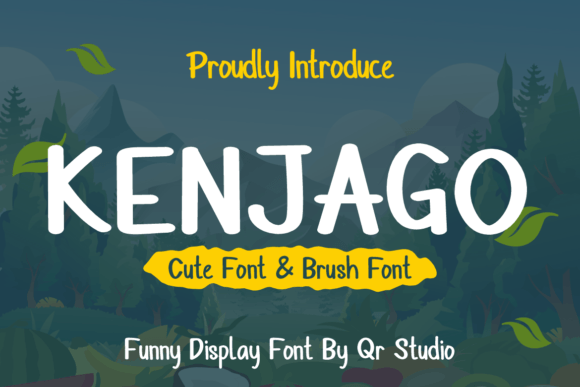
Kenjago: A Friendly Handwritten Font for Makers
There is something quietly magical about pulling a freshly printed card off the press or peeling a brand-new sticker from its backing sheet, and watching a single typeface pull the entire design together. When I first tested Kenjago in my own little stationery studio, I knew within minutes it would become a workhorse in my creative toolkit. This sweet and friendly handwritten font carries a warmth that feels personal without being fussy, approachable without looking amateurish. For anyone who designs physical products, digital printables, or custom gifts, finding a script font that balances charm with real usability is rare—and Kenjago does exactly that.
What strikes me immediately about Kenjago is its natural rhythm. Many handwritten fonts feel stiff or overly rehearsed, as though they were drawn with a ruler hiding just off the page. Kenjago flows. The letterforms have a gentle bounce, a soft irregularity that mimics actual penmanship while remaining clean and legible. It carries the kind of organic warmth that makes a product feel handmade, even when it is being produced in larger batches. For shop owners and crafters who want to communicate care and authenticity, this typeface speaks that language fluently.
The Personality Behind Kenjago
A good script font tells a story before the reader processes a single word. Kenjago feels like a conversation over coffee, like handwriting on a cherished recipe card, like the note a friend tucks into a gift bag. It is gentle without being fragile, sweet without being saccharine. The strokes have a comfortable weight—not too thin, so it holds up on textured materials, and not so heavy that it loses its delicate character. This balance makes it incredibly versatile across a wide range of craft applications.
When I look at Kenjago set against a clean background, I see possibilities. It could live on a minimalist wedding invitation, a rustic candle label, a playful birthday banner, or a polished product tag. The font's friendly demeanor invites the customer in. It signals that someone took the time to choose the right details. In a marketplace where small touches separate a sale from a scroll-past, that matters enormously.
Using Kenjago on Physical Products
One of the first places I reach for Kenjago is product labeling. Candle jars, soap boxes, honey jars, and small-batch skincare containers all benefit from this type of lettering. The handwritten quality suggests craftsmanship, which directly reinforces the value proposition of a handmade good. A lavender candle labeled with Kenjago feels soothing and personal. A jar of artisanal jam tagged with this font looks like it came from a countryside farm stand rather than a factory line.
Stickers are another natural fit. I have used Kenjago on die-cut kiss-cut sticker sheets, planner decals, laptop decals, and small product seals. Because the letterforms are open and uncluttered, they cut beautifully on both Cricut and Silhouette machines. Fine details do not get lost, and the font maintains its integrity even at smaller sizes, which is essential for sticker designers who need reliable results every time they send a sheet to the blade.
Greeting cards and invitations are perhaps where Kenjago truly shines. A birthday invitation addressed in this font feels celebratory and warm. A baby shower card with Kenjago scripted across the front has an instant tenderness. Because the font includes natural-looking alternates where available, you can adjust the flow of a phrase so it never looks mechanically repeated. That is a subtle but powerful advantage for invitation designers who want each suite to feel custom.
Wedding Stationery and Special Events
Bridal clients can be exacting. They want romance without cliché, personality without chaos. Kenjago strikes that chord beautifully. On wedding welcome signs, place cards, menu cards, and ceremony programs, the font adds a soft, romantic note that complements rather than competes with floral illustrations, watercolor washes, or minimalist layouts. Paired with a clean sans serif font for body text, Kenjago becomes the graceful voice that greets guests and sets the emotional tone.
For save-the-date cards and engagement announcement prints, this script font carries the intimacy of a handwritten letter. It hints at the personal nature of the event without being overly ornate. I have seen designers use Kenjago on acrylic welcome boards with vinyl lettering, and the results are striking—elegant but not pretentious, sweet but still sophisticated.
Digital Printables and Downloadable Products
If you sell digital downloads on Etsy or your own storefront, you already know how crucial typography is to the perceived value of a printable. Planner pages, journal inserts, habit trackers, wall art prints, and affirmation cards all rely on fonts that feel intentional and beautiful. Kenjago works exceptionally well for headings, inspirational quotes, and decorative phrases within these products. A printable wall art piece with a morning mantra rendered in Kenjago feels like a handwritten note from a dear friend rather than a mass-produced graphic.
For seasonal printables—think Christmas gift tags, Easter egg hunt clues, Halloween party invites, or Thanksgiving menu cards—Kenjago adapts effortlessly. Its neutral warmth does not lock it into one aesthetic, so it can dress up or down depending on the surrounding design elements. That flexibility means fewer font purchases and more mileage out of a single creative asset, which is something every small shop owner can appreciate.
Merchandise, Apparel, and Promotional Items
T-shirts, tote bags, mugs, and caps with text-based designs continue to be strong sellers in the handmade and print-on-demand space. Kenjago lends itself well to short phrases, names, dates, and meaningful quotes—the exact kind of content that customers gravitate toward. A tote bag printed with a simple "hello sunshine" in Kenjago carries a warmth that a colder, more geometric font simply cannot replicate.
When creating heat-transfer vinyl designs for cutting machines, Kenjago performs reliably. The lines are clean enough to weed without frustration, yet the font retains its handwritten character. I have run this typeface through multiple vinyl cuts now, and the consistency gives me confidence recommending it to fellow crafters who sell at markets or run online merch shops. Small business owners creating branded merchandise for their own shops will also find Kenjago useful for adding a personal touch to packaging tape stamps, thank-you inserts, or logo variations.
Readability, Scale, and Practical Considerations
A beautiful font is only as useful as it is readable in real-world applications. Kenjago holds up well across a range of sizes, though like most script fonts, it performs best as a display or accent typeface rather than body copy for long paragraphs. It is ideal for short phrases, names, titles, decorative wording, product names, and callout text. For longer product descriptions or instructional text, pairing it with a simple serif or sans serif font keeps the design accessible and easy to scan.
When working with small stickers, labels under two inches, or tiny tags, I recommend test-cutting at actual size before committing to a full production run. Kenjago's open counters and moderate stroke contrast make it more forgiving than many decorative scripts, but checking readability at small scale is always a wise practice. For product labels that must remain legible at a glance, setting Kenjago at a generous point size and keeping the word count brief yields the best results.
Mockup previews are another area where this font shines. When I drop Kenjago onto a product mockup—a kraft paper label, a clear sticker on a glass jar, a wedding invitation flat lay—the font translates beautifully. It does not look like a digital afterthought. It looks like it belongs on the product. That kind of cohesion helps customers imagine the item in their own lives, which directly supports conversion rates.
Font Pairing Ideas for Kenjago
One of the most rewarding creative exercises is finding the right pairing for a script font. Kenjago's friendly, flowing style pairs wonderfully with grounded, simple typefaces that provide contrast and structure. For product labels and packaging, I often reach for a clean sans serif font with a neutral tone—something understated that lets Kenjago carry the personality. The result is a balanced design where the script adds warmth and the sans serif ensures clarity for ingredients, instructions, or secondary details.
For wedding stationery and elevated branding, pairing Kenjago with a delicate serif font can produce a timeless, romantic result. The serif brings a touch of tradition, while Kenjago keeps the whole composition feeling fresh and personal. In logo design contexts, a bold display font paired with Kenjago creates visual tension that feels intentional and modern—ideal for boutiques, salons, and lifestyle brands that want to communicate elegance with an approachable edge.
Some specific combinations worth exploring include pairing Kenjago with open-source sans serifs that offer a wide range of weights, or with classic serif fonts known for their readability. The goal is always contrast: thick versus thin, structured versus organic, neutral versus expressive. Kenjago holds its own in these pairings because its voice is distinct but not overpowering.
Commercial Use and Licensing Confidence
For those of us who sell what we make, font licensing is not a minor detail—it is the foundation of a legitimate business. Before embedding a typeface into a product line or a digital download, confirming that commercial use is permitted is essential. Kenjago, as a commercially usable font, offers peace of mind for shop owners creating physical end products, printed merchandise, client work, templates, logo designs, and digital files intended for resale.
Typical commercial licensing covers a wide range of uses, but I always recommend reviewing the specific terms included with your purchase. Check whether the license extends to digital printables, SVG designs, embedded fonts in templates, and merchandise sold in unlimited quantities. If you plan to use Kenjago in logo design for clients, verify that the license supports that application. Responsible licensing protects your business and respects the type designer's work—both of which are core values in the maker community.
Design Consistency and Brand Recognition
Sticking with a small, thoughtfully chosen set of fonts can strengthen brand identity more than chasing every new release. Kenjago offers a consistent, recognizable voice that can unify product photography, social media graphics, packaging design, and web visuals. When a customer sees that familiar handwritten style across your Instagram posts, your market stall banner, and your product labels, they begin to associate that warmth with your brand specifically.
This kind of typographic consistency builds trust. It signals professionalism and attention to detail. Whether you run a small soap shop, a stationery studio, or a printable empire on Etsy, Kenjago can serve as the friendly face of your visual identity. Its natural and unique look adapts across contexts without losing its core character—a rare and valuable quality in any script font.
Seasonal and Holiday Crafting
Seasonal product lines thrive on fonts that feel festive without being gimmicky. Kenjago's sweetness suits holiday designs remarkably well. For Christmas, imagine it on Santa sack tags, advent calendar numbers, or hot cocoa kit labels. For Valentine's Day, it adds a tender note to love notes, chocolate box bands, and gift enclosure cards. Around Thanksgiving, it brings warmth to table place cards, gratitude journals, and hostess gift tags.
Spring markets and Easter collections benefit from Kenjago's light, cheerful tone. Summer craft fairs and wedding season see it deployed across countless invitation suites and décor items. Because the font does not lean too heavily into any one seasonal cliché, it transitions smoothly from one holiday to the next. That versatility means fewer font swaps throughout the year and a more cohesive product catalog overall.
Bringing Kenjago Into Your Workflow
Adding a new font to your creative practice should feel like gaining a new tool, not adding complexity. Kenjago integrates easily. It works in popular design software used by crafters and small business owners. Whether you design in Adobe Illustrator, Affinity Designer, Canva, or even directly in cutting machine software, this handwritten font behaves predictably and renders cleanly. OpenType features, where available, expand your options with ligatures and stylistic alternates that keep your designs feeling bespoke.
Start with a project you know well—a product label, a thank-you card, a shop banner—and test Kenjago there. Notice how it shifts the tone. Notice how it softens the edges of a layout or adds personality to a simple phrase. Pay attention to how your customers respond. Often, the switch to a warmer, more human typeface results in more engagement, more compliments, and more sales. That is not an exaggeration; it is something I have experienced firsthand.
Kenjago is a sweet and friendly handwritten font whose natural and unique look truly does fit a wide pool of designs. From candle labels to wedding signage, from digital art prints to tote bag graphics, it brings a consistent charm that elevates handmade products with quiet confidence. The only limit is your imagination—and for makers, that is a very exciting boundary indeed.